
Follow us


How Your Home's Electrical System Works
By Elizabeth Smith
May 01, 2026
If you've ever wondered how electricity travels from a power plant to your TV, you're not alone. Many people use electricity every day without understanding the complicated system that delivers it to and through their houses. When you understand how your home electrical system works, however, it's easier to use it safely and efficiently.
This May Also Interest You: How Much Do Electrical Repairs Cost? A Comprehensive Guide
How Does Home Electricity Work?
Your house or apartment is part of a vast electricity network. Here's how power travels from a power plant, into your home, and directly into your electrical devices.
How Does Electricity Get to My House?
Before electricity can arrive at your home, it must be generated. Some power plants burn coal, oil, or natural gas to generate electricity. Others use geothermal energy or the power of flowing water. In some areas, power is generated by solar panels or wind turbines.
These plants send electricity into the power grid, which consists of power lines, transformers, and substations. Electricity travels into a substation, where transformers step up the voltage. This high-voltage electricity travels long distances along transmission power lines to a substation near you. There, transformers reduce the voltage.
The lower-voltage electricity travels along distribution lines to a transformer near your home. This transformer reduces the voltage even further, so it's compatible with your home's electrical system. This usable energy moves along power lines to the utility pole nearest your house.
From the utility pole, a bundle of cables runs from the pole to your home — either overhead or underground — and connects to your electric meter. Then, it connects to your breaker panel.
What Are the Main Parts of a Home Electrical System?
Before you learn how power moves through your house, it's helpful to understand the different parts of the electrical system. Most homes have several key parts:
Electric meter: This device, which is owned by your power company, monitors the amount of electricity that flows into your home. That way, the company can bill you accurately.
Breaker panel: This panel directs the flow of energy through your home through different circuits.
Branch circuits: A circuit is an electrical path that allows energy to flow to part of your home. It includes a set of wires that run between the breaker panel and one or more outlets, fixtures, and switches. Each circuit is wired for a maximum amount of current, which determines how many devices you can connect. Your house might have separate circuits for different rooms or systems such as lighting, large appliances, and ground fault circuit interrupter (GFCI) outlets in bathrooms. Appliances that need higher-voltage electricity, such as dryers and stoves, might have their own circuits.
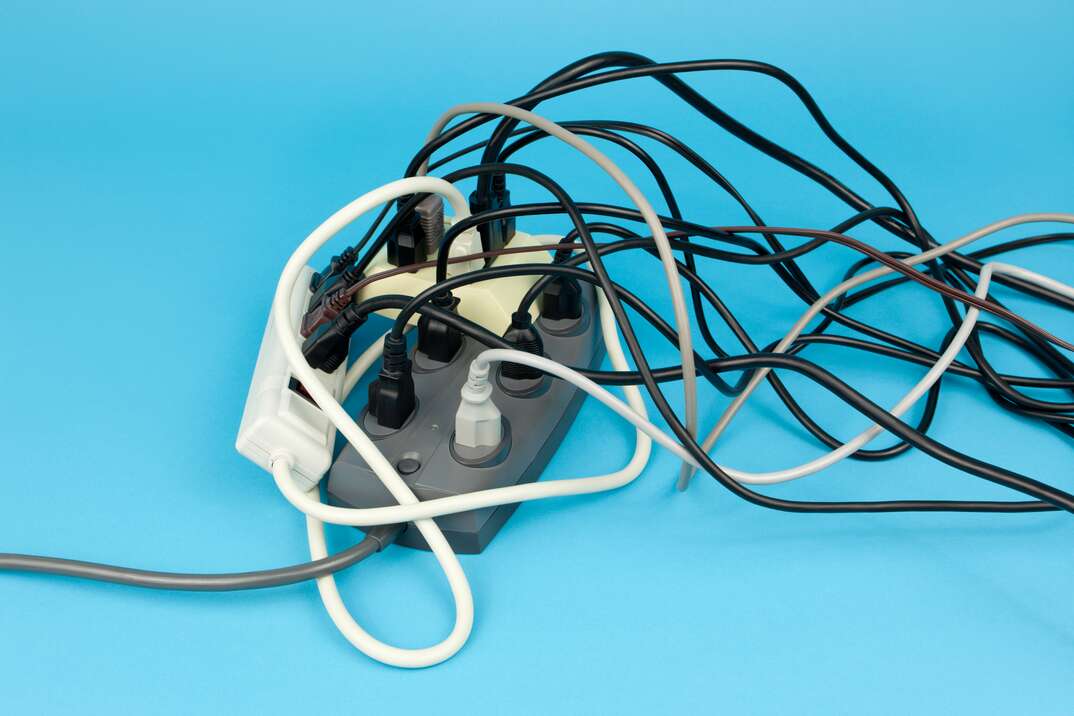
Circuit breakers: Circuit breakers are safety devices that cut the flow of power. Your house typically has a main circuit breaker and an individual breaker for every branch circuit. These smaller circuits are often connected to manual switches on the breaker panel, so you can turn off power to specific areas for maintenance or troubleshooting. These breakers may also trip automatically if the circuit is overloaded — when you plug too many devices into the same circuit, for example.
Wiring: Electricity travels around your home through a series of wires.
Switches and outlets: Switches at outlets are located along your electrical circuits, allowing you to use the electricity flowing through. Switches turn power on and off to lights or other appliances. Outlets allow you to connect devices to your home's electrical system.
What Types of Wires Are in My House?
The wires that run between your circuit breaker and your outlets, devices, or switches usually feature three separate wires:
Hot: This live wire carries the electricity from the breaker to the outlets, switches, and appliances.
Neutral: The neutral wire completes the circuit and creates a path for electricity to flow back into the breaker panel.
Ground: The ground wire provides a safe path for extra electricity to travel on. It connects to the ground bar on your breaker panel, which allows it to flow into the earth. This reduces the risk of shocks and fire if something goes wrong.
These three wires are protected from moisture, damage, and corrosion by an outer casing. Some houses use non-metallic (NM) sheathed cables, which are covered in flexible PVC. Others might be protected by steel, aluminum, or conduit (metal or plastic pipes).
More Related Articles:
How Does the Power Ultimately Get to My Devices and Appliances?
As power flows into your house, it passes through the meter and travels to your breaker panel. There, it travels into the different circuits. When you close the circuit — by plugging a device into an outlet or turning on a switch, for example — the current travels into your device.
When a device is plugged in but not in use, such as a microwave or oven, electricity continues to flow. These devices continue to use a small amount of standby power. However, you can also buy smart outlets and power strips that automatically cut the flow of power when a device is off.
How Does the Main Circuit Breaker Work?
The main circuit breaker is your home's safety switch. Just like the breakers on the branch circuits, it's designed to cut the flow of power if the current gets too high. This can happen if the wiring is damaged or if your connected appliances and devices are drawing more power than the wiring can handle. A tripped main circuit breaker can indicate a serious issue in your home's electrical system, so it's important to call a professional to diagnose the problem.
How Does Renewable Power Affect a Residential Electrical System?
If you have a residential wind turbine or solar panel array, your home electrical system might look slightly different. The system generates power and sends it through an inverter, which converts it from direct current (DC) into alternating current (AC) — the type of current your house uses. The AC power travels through wires to your breaker panel.
From there, the system design can vary. If you're tied to the grid, your home will connect to the utility pole with bidirectional wires. That means that if you generate more power than you use, it can flow back into the grid. These systems usually have a two-way electrical meter that measures the power entering and leaving your home. That way, you can be compensated for the power you feed into the grid.
If you live in an off-grid home, your electrical system will have a set of batteries to store the power from your renewable system. From there, it can flow into an inverter and into the house.
Maintaining Your Home Electrical System
Whether you have solar panels or you're connected solely to the grid, it's important to keep your home electrical system in good shape. Damage to the wires, switches, breaker panel, or outlets can disrupt the flow of electricity and create a risk for fire, shocks, or explosions. By maintaining and inspecting the wiring regularly, you can use your electrical devices with confidence.
View Plans in Your Area
Follow us
Popular


Oct 04, 2025

Apr 26, 2021
Get the latest news, tips and promotional messages, including special offers.