
Follow us


Everything You Need to Know About HVAC Dampers
By Shelley Frost
November 28, 2024
You adjust your thermostat, and your HVAC system automatically adjusts to help keep you comfortable. But how does the system really work?
This May Also Interest You: HVAC Terms Every Homeowner Should Know
Heating and cooling equipment has all types of parts that heat or cool, dehumidify, filter and direct the air throughout your home.
What Is an HVAC Damper?
An HVAC damper is a plate that sits inside an air duct to help direct airflow through the system. You can open or close a duct damper to control how much air goes to a certain part of your home. They're often part of zoned heating and cooling systems, which allow you to choose different temperature settings for each zone, or section, of your home.
What Does a Damper Do in HVAC Systems?
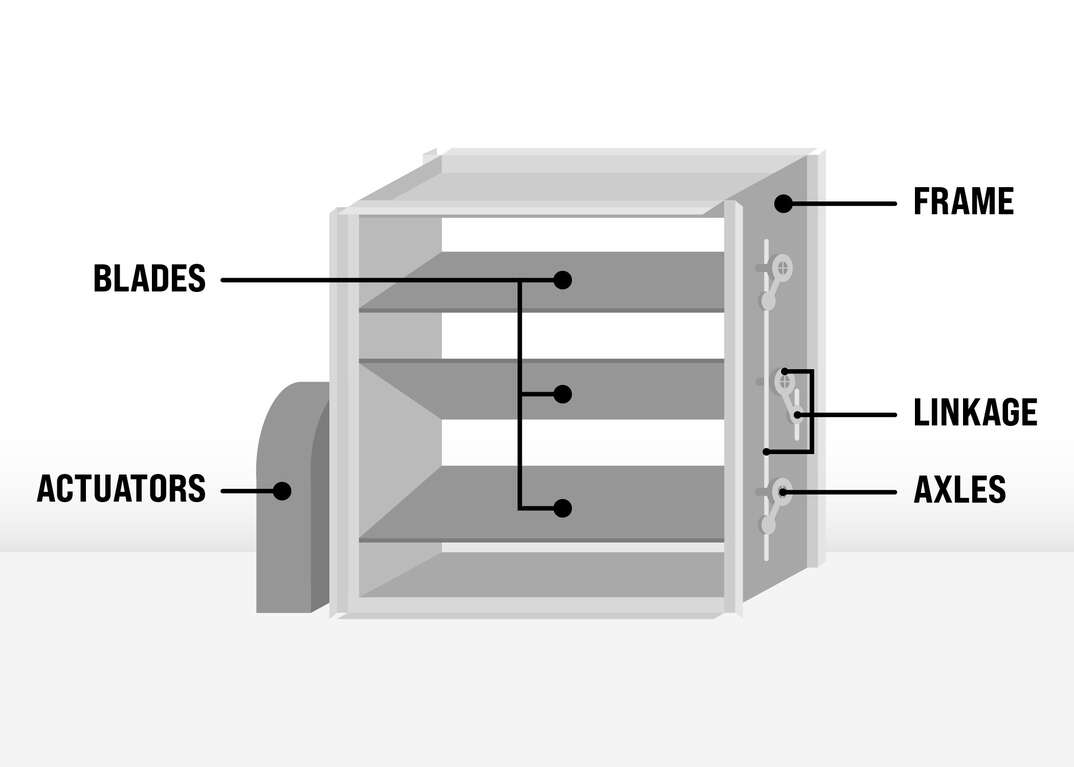
Dampers act as valves within the ductwork of your heating and cooling system. When closed, they stop air from moving down a particular section of ductwork. An open HVAC damper allows the system to push air freely through that stretch of ductwork, carrying it to the vents in the connected rooms. You can also adjust the damper to different degrees based on how much air you want to go in that direction.
Where Are Dampers Located?
Vent dampers are installed inside the ductwork for your HVAC system. Your system has a main trunk that leads from the unit to the rest of the ductwork that runs to all the rooms. Ductwork dampers are usually located in the main trunk close to the air handler for the system. Along the main trunk, there are junctions where ducts run to various parts of your home. Most systems have additional dampers at each of those junctions. This design lets you choose which rooms receive air and how much air they receive.
How Do Dampers Work?
Think of an HVAC damper as a valve within the ductwork. You can open or close it to varying degrees to allow airflow through certain areas. HVAC systems can have manual and motorized dampers, and how they work depends on the type.
You adjust manual dampers yourself to allow more or less airflow through that section of ductwork. Manual dampers have levers on the outside of the ductwork you can turn to open or close the damper.
Zoned HVAC systems often have motorized dampers. When you adjust your thermostat to change the temperature in a specific part of your home, the dampers automatically adjust to help the system achieve the correct temperature. This type is the easiest because you don't have to do the work or decide how much you should adjust the dampers.
More Related Articles:
Gimme a Tax Break: 5 Things to Know to Get the Latest HVAC Tax Credits and Rebates
Replacing Your HVAC Filter Is a Breeze! Follow These 7 Steps ...
HVAC System Stop Working? Try These Troubleshooting Tips Before You Call for Service
Are Dampers Worth It for HVAC?
An HVAC damper system can be worth it if you want more control over the temperature in different parts of your home. Say you have an area that doesn't get used very often, and you don't want to heat or cool it as much. Closing the damper to that area, at least partially, could help you save on heating and cooling costs.
Some people close off the vents in the rooms they don't want to heat or cool. However, that could increase your heating and cooling expenses and cause damage to your equipment. This method forces air back into the ductwork, often increasing the static pressure inside the vents. The redirected air typically doesn't go to other rooms.
Dampers give you more control over heating and cooling. You can generally have your current system retrofitted to make it a zoned system with dampers.
Should My HVAC Dampers Be Open or Closed?
HVAC dampers can be open or closed, depending on how you want to control air in your home. If you want to heat or cool your entire home to the same temperature, all dampers should be open to allow the air to move to all vents. To change the temperature in a certain part of the home, close the damper to that area. You can close it completely or partially.
You can also control dampers strategically based on seasons. Closing dampers to upstairs rooms in the winter encourages heat to naturally rise from the lower levels. In the summer, closing dampers on the lower level, which naturally stays cooler, pushes more cool air upstairs.
View Plans in Your Area
Follow us
Popular


Oct 04, 2025

Apr 26, 2021
Get the latest news, tips and promotional messages, including special offers.