
Follow us


What Is 'Net Metering' in Solar Power?
By Michael Franco
August 26, 2024
Net metering is a billing arrangement and policy tool that plays an important role in the adoption and economics of solar power systems.
This May Also Interest You: What’s It Like to Go Solar? 5 Things They Don’t Tell You in the Brochure
By allowing homeowners and businesses with solar panels to connect to the electrical grid, net metering facilitates the efficient use of solar energy and offers economic incentives to solar power users.
How Does Net Metering Work?
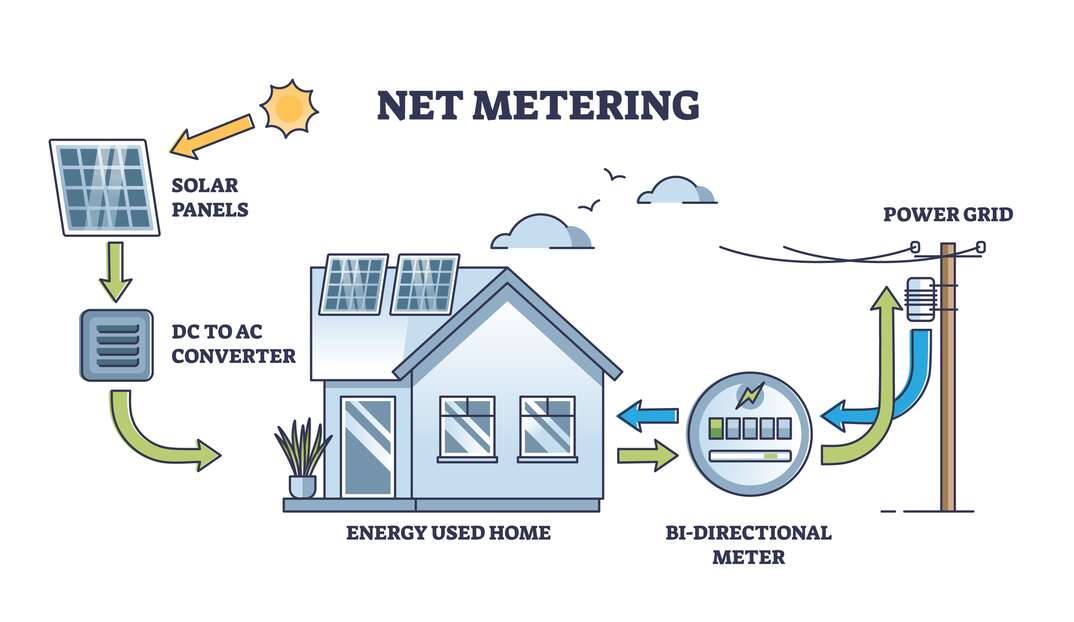
Net metering basically allows homeowners and businesses with solar panels to return excess electricity back to the local utility power grid when those panels generate more energy than is needed for their consumption. The process starts when a solar power system, typically installed on a rooftop, generates electricity. During sunny days, especially around midday, these solar panels may produce more electricity than the household or business consumes.
When this excess electricity is generated, it doesn't go to waste. Instead, through net metering, it is sent back to the utility grid. The homeowner’s electric meter runs backward, effectively providing a credit on their utility bill. This means the homeowner only pays for the "net" amount of electricity used—calculated as the total electricity consumed minus the excess electricity sent back to the grid.
For instance, if a home consumes 1,000 kWh of electricity in a month but produces 1,200 kWh through its solar panels, net metering allows the 200 kWh surplus to be fed into the grid. The homeowner will then receive a credit for this surplus, which can offset the cost of electricity used from the grid during cloudy days or nighttime when solar panels aren't generating power.
Do All Jurisdictions Have Net Metering Programs?
Net metering policies are not uniform across all jurisdictions. In the United States, for example, net metering rules can vary significantly from state to state. Some states have strong net metering programs that provide substantial benefits and incentives for solar power users, while other states have more restrictive policies or do not offer net metering at all.
In some jurisdictions, there are caps on the amount of electricity that can be fed back into the grid, limiting the amount of net metering credits a homeowner can receive. Other areas may limit the size of solar power systems eligible for net metering, often to a percentage of the home or business's electricity consumption.
Internationally, net metering policies also vary. Some countries have robust net metering frameworks to encourage renewable energy adoption, while others may not have such policies in place or may use alternative schemes, such as feed-in tariffs. As solar power becomes more popular and technology evolves, many regions are continually reassessing and adjusting their net metering policies.
You can find out more about the energy-related policies in your specific state by using this handy map provided by North Carolina State University's DSIRE program.
Pros and Cons of Net Metering
Net metering offers several advantages, but it also comes with some challenges and criticisms. Here’s a closer look at both sides.
What are the Pros of Net Metering?
Economic Benefits
One of the most significant advantages of net metering is the economic benefit it provides to solar power system owners. By receiving credits for excess energy generated, homeowners can significantly reduce their utility bills. Over time, this can lead to substantial savings and a quicker return on investment for the solar power system.
Efficient Use of Renewable Energy
Net metering encourages the efficient use of renewable energy. By giving excess electricity back to the grid, solar power can be used by others, lessening reliance on electricity generated from fossil fuels. This helps decrease carbon emissions and supports environmental sustainability.
Grid Stability
Net metering can contribute to grid stability by providing additional electricity during peak demand times, such as hot summer afternoons. This distributed generation reduces the strain on the grid and can help prevent power outages.
Incentivizes Solar Adoption
Net metering can build appeal for homeowners and businesses thinking about investing in solar power systems. Knowing that they can receive credits for excess electricity and lower their utility bills makes solar power a more attractive option.
More Related Articles:
What Are the Cons of Net Metering?
Impact on Utility Companies
One of the main criticisms of net metering is its impact on utility companies' revenue. As more consumers generate their own electricity and receive credits, utilities may face financial challenges. This has led some utility companies to lobby for changes to net metering policies, arguing that they still need to maintain the grid and provide services.
Grid Management Issues
In areas with high solar adoption, managing the grid can become more complex due to fluctuations in solar power generation. On cloudy days or during the night, solar power drops, leading to increased demand from the grid. This intermittency can pose challenges for grid operators.
Cost Shifting
Another concern is the potential for cost shifting, where non-solar customers may end up paying more to cover the grid maintenance costs that solar users avoid through net metering credits. Critics argue that this shifts the financial burden to those who cannot afford or choose not to install solar panels.
Policy Uncertainty
Net metering policies are subject to change, which can create uncertainty for homeowners considering solar power investments. Changes in regulations, caps on net metering, or reductions in credit rates can affect the financial viability of solar projects.
View Plans in Your Area
Follow us
Popular


Oct 04, 2025

Apr 26, 2021
Get the latest news, tips and promotional messages, including special offers.