
Follow us


How Ready Are Homeowners for Extreme Weather Events? See Our Survey
By Matt Schmitz and Lauren Leazenby
September 23, 2025
Be it severe thunderstorms or high-wind horrors like tornadoes and hurricanes, wildfires or flash floods, dust storms or droughts, most Americans answering an all-new HomeServe survey have experienced some type of extreme weather event in their lives. Hardly surprising, considering the rapidly rising frequency of such events taken in tandem with the massive (and mounting) monetary losses left in their wake — averaging nearly two-dozen annual incidences and some $150 billion per year in damage over the past five years. So, given the escalation of such climatological catastrophes and their costs, we feel compelled to ask: Homeowners, how prepared are you for an extreme weather event?
This May Also Interest You: Less Money, More Problems: 1 in 5 Homeowners Save Zilch for Emergency Repairs Amid Rising Incidents
HomeServe conducted a survey of nearly 600 homeowners, distributed among city dwellers, suburbanites and rural residents, to gauge their confidence in their households' disaster preparedness. On a scale of 1 to 5, with 1 being not prepared at all and 5 being very prepared, survey respondents rated their readiness at just over 3.5 — not terrible, but right around the Yelp score where you’ll decide whether to eat at a restaurant or not. We’re not here to cause undue anxiety, but your home’s chances of incurring costly damage in extreme weather are rising all the time.
According to the National Oceanic and Atmospheric Administration, there have been just over 400 weather-related disasters in the U.S. from 1980 to 2024 that have carried price tags for damage incurred of over a billion dollars — an average of about nine such incidents per year. But the actual numbers aren’t even close to being evenly distributed across the 44-year period. In 1980, just three qualifying weather disasters occurred, totalling less than $46 billion. Moving along the upward-sloping annual averages to 2024, a total of 27 qualifying catastrophes occurred that year, totalling nearly $183 billion in damage — 9 times the 1980 number and quadruple the cost. Moreover, the average number of multi-billion-dollar incidences across the past four and a half decades is nine per year, but zooming in on the average over just the past five years, that number jumps to 23.
The HomeServe survey specifically quizzed homeowners on their preparedness for hurricanes, tornadoes, floods, wildfires, severe thunderstorms and dust storms. And, not for nothin’, the respective peak seasons for each of those weather events all fall between March and September, according to published estimates. In other words, warm weather brings bad weather, so if you’re reading this during these months of heightened risk — or if you just wanna see how you measure up versus your fellow homeowners’ doomsday-prepping prowess, keep reading.
What’s in Your Emergency Kit (If You Have One)?
The HomeServe study asked survey respondents if they have a kit and, if so, which of 27 specified items does it contain. Specified items included such staples as a First Aid kit, blankets, a flashlight and extra batteries, a phone charger, nonperishable food and bottled water, survival devices such as a hand-crank radio and portable water-filtration system, as well as necessities like assorted cash and important documents.
Nearly 15% of homeowners reported having no dedicated emergency-preparedness supplies of any sort. Among those who do, the most common are a First Aid kit (56% have one); a supply of bottled water totaling 1 gallon per person, per day (48%); a three-day supply of nonperishable food (43%); and a manual can opener, hand sanitizer and emergency blankets (41% each). The least-common preparedness items in surveyed homeowners’ survival bags are electrolyte powder packets (less than 12% keep them on hand); a portable water-filtration system (15%); an emergency whistle (17%); and a compact tent or pop-up shelter (18%).
Got a Generator?
Severe weather events, from thunderstorms to hurricanes, are routinely accompanied by power outages that can last from hours to days. And when you lose electricity, you and your family aren’t just left in the dark with no lights and no TV, but often you’re left without air conditioning in the summer. That’s when you’ll be thanking your lucky stars you had the foresight to have a generator on hand to pick up the slack when the grid goes down. Generators come in many sizes, capacities and prices depending on your power needs and the square footage of your house. Installing a whole-house generator can power your entire home, and could set you back between $10,000 and $20,000 on average. But a smaller, portable generator may serve your needs just fine during the odd outage, and can range in price from $200 to $650 for a 500- to 2,000-watt model to between $2,000 and $4,000 for a 10- to 18-kilowatt model.
Nearly half of the HomeServe survey respondents reported either having an emergency backup generator to power their household through an outage (43%) or intending to get one within the next three months (7%). Another 22% said they do not have a generator but that they are interested in having one installed, and more than 26% have no immediate plans to install one.
More Related Articles:
Staying in the Know, Knowing Where to Go
Ever been in a group when there’s flooding in the area and everyone’s smartphone simultaneously makes a loud, dire-sounding noise? That means you’re around a bunch of actively engaged citizens doing their civic duty (or perhaps they haven’t figured out how to turn off some of those emergency alerts in their settings). In any case, opting in to receive those emergency phone alerts is an easy way to stay informed about what’s coming down the pike weather-wise so that you can make preparations or take shelter if necessary.
Participants in the HomeServe study were doing pretty well on this front, with some 90% either already set up to receive alerts via text or email (73% said so) or interested in signing up to get emergency messages (17%). Less than 10% just wanted to be left alone.
And if you receive an alert on your phone instructing you to proceed to the closest emergency shelter in your area … do you know the location of the closest emergency shelter in your area? Less than half of surveyed homeowners do (49%), while nearly 16% think they know but would have to confirm to be certain. Just over 35%, meanwhile, simply do not know where to go in the event of an emergency in which they are urged to take cover at the nearest shelter.
Stick to the Plan
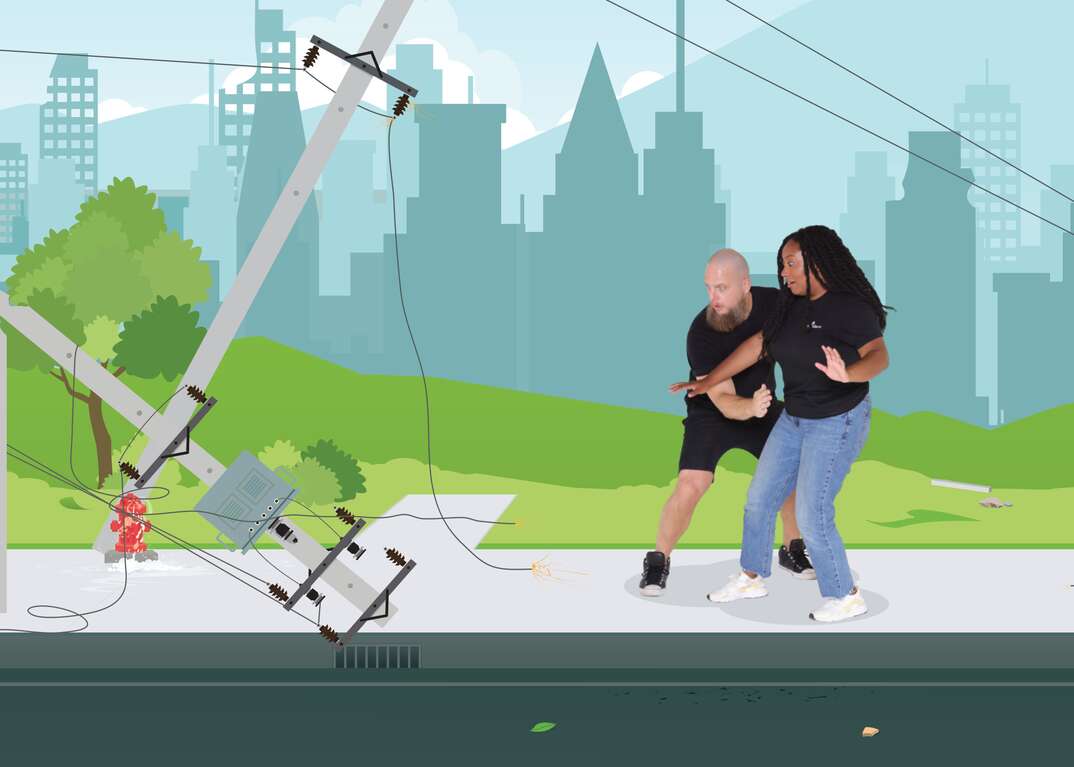
While it’s smart to take shelter during a severe weather event, sometimes it’s smarter to evacuate — depending, of course, on the recommendation from local authorities. Most of the time, evacuation is possible while the sun is still shining. But, occasionally, the need to leave your home is only apparent once the storm has moved in. This can be dangerous, as downed trees and power lines can block roads, while storm surges and flooding can wash them out completely. You and your family might have a plan to bug out to Uncle Bob’s place further inland as the floodwaters rise, but what happens when a traffic jam blocks the way?
About 58% of HomeServe survey respondents said they either have no backup plan in this case, or they haven’t communicated a backup plan to their family members.
Emergencies can pop up at any time, even when family members might be at work or school. So, you can imagine a scenario where you and the members of your household evacuate at different times or go to different places, and you find yourselves separated from one another.
Thankfully, most HomeServe survey respondents — 57% of them — have a solution for this. They have identified an out-of-town friend or relative to serve as the official point of contact for any household members who may get separated in a disaster.
What About Your Home?
Keeping your family safe during a disaster is likely your top priority. But if your emergency plan is to shelter in place and ride out the storm, you might want to make sure your fortress (your home) is fortified (well-maintained).
In no particular order, here are some tasks you should do before a storm arrives at your doorstep. Hint: It’s always sooner than you think it is.
Check your roof for damage and patch any holes to avoid leaks.
Put patio furniture in the garage, tie down loose items and keep your yard clean.
Make sure your gutters are clear for heavy rainfall.
If you’re facing a particularly nasty hurricane or similarly severe storm, shutter up your doors and windows or put up some plywood.
Remove dead and weak branches from trees, and trim them to keep them from damaging your house.
Over 45% of survey participants said they’ve cleared their gutters and downspouts in the past month — or their property management company takes care of it for them. But that means 55% of respondents’ gutters could be full to the brim with sticks, leaves and all kinds of gunk. That could lead to all sorts of flooding and roof or foundation damage.
But HomeServe survey respondents don’t seem to play when it comes to their trees. More than 70% of them said they’ve recently trimmed their trees and tied down loose items to protect their homes during high winds.
View Plans in Your Area
Follow us
Popular


Oct 04, 2025

Apr 26, 2021
Get the latest news, tips and promotional messages, including special offers.